
What is direct data rate?
When two iroh endpoints connect, traffic either flows directly between them (peer-to-peer) or gets routed through a relay server. Direct connections are faster and cheaper. Relayed traffic adds latency and burns relay bandwidth. Direct data rate is the percentage of your network’s traffic flowing directly. A high rate means NAT traversal is working and your users are getting the best possible connection. A low rate means too much traffic is falling back to relays, which is worth investigating.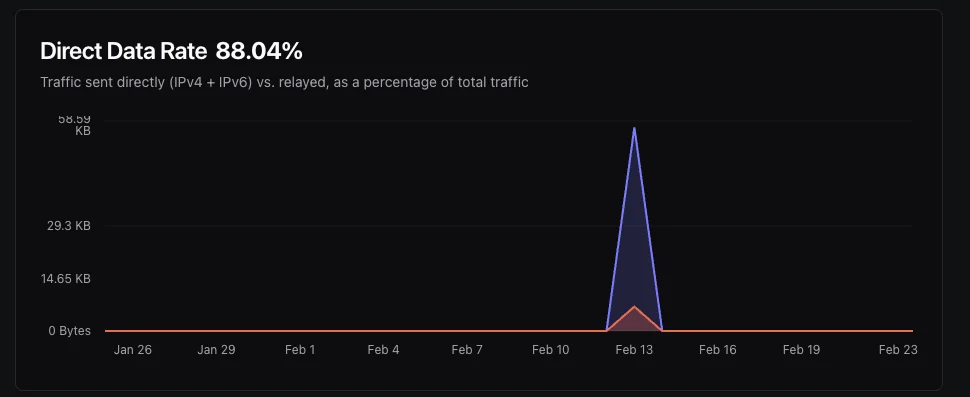
Add the Iroh Services Client
In Rust, add theiroh-services crate to your Cargo.toml:
iroh-ffi, with no extra dependency needed.
Connect Your Endpoint
Then, in your code, create a client and connect your endpoint to Iroh Services. Giving the endpoint a name makes it easy to identify on the dashboard; unnamed endpoints are harder to distinguish from each other.View Your Endpoint on the Dashboard
Go to your project’s Endpoints page. You should see your endpoint listed as online. Click on it to view details.Next steps
Diagnose a connectivity issue
Run remote diagnostic reports on your users’ endpoints to find out why connections fail.
Add a relay
Configure dedicated relays for your endpoints and learn why they matter for production.
Build a chat app
Build a peer-to-peer chat application from scratch using the iroh gossip protocol.